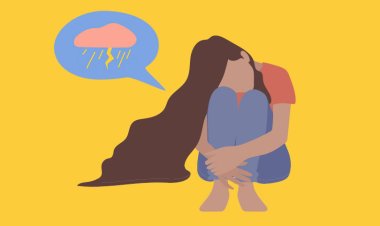
WHAT YOU NEED TO KNOW ABOUT PASSIVE vs ACTIVE SUICIDAL THOUGHTS
Learn the difference between passive and active suicidal thoughts, signs to watch for and why awareness matters for suicide prevention.
 Mental Health Vibe

Every September the world pauses to reflect on the importance of suicide prevention. For many, suicidal thoughts are not just an abstract idea but lived experiences that can feel overwhelming, isolating and confusing.
Suicidal ideation or suicidal thoughts is when you think about, consider or feel preoccupied with the idea of death and suicide. These thoughts may come and go or be extremely distracting. Experiencing suicidal ideation doesn’t mean you’re going to kill yourself but it can be a warning sign. Not all suicidal thoughts look the same. Understanding the difference between passive and active suicidal thoughts can save lives.
How common is suicide and suicidal ideation?
According to the World Health Organization (WHO), more than 720,000 people worldwide die by suicide every year. Suicide is the third leading cause of death among 15–29-year-olds. Additionally, the number of men who die by suicide is more than women in almost all countries of the world. For every suicide there are many more people who attempt suicide. A prior suicide attempt is an important risk factor for suicide in the general population. Besides, about 73% of global suicides occurred in low- and middle-income countries in 2021 [World Health Organization, 2025].
Data on the prevalence of suicidal ideation in Africa is often limited and fragmented, but available studies suggest it is a significant public health issue, especially among young people.
What Are Passive Suicidal Thoughts?
Passive suicidal thoughts occur when an individual no longer has the motivation to live but with no concrete plan to take their life. They are still considered serious because they reveal deep emotional pain and hopelessness [Wastler et al., 2023; Ayalon et al., 2009]. They are often subtle and easy to dismiss and may sound like:
- “I wish I wouldn’t wake up tomorrow.”
- “Life would be easier if I just disappeared.”
- “Maybe if something bad happened to me, it wouldn’t be so bad.”
Passive suicidal ideation is a severe mental health concern and should be taken seriously. The level of treatment depends on the person, their support system, and their state of mind. Anyone experiencing these thoughts should be evaluated by a mental health professional.
What Are Active Suicidal Thoughts?
Active suicidal thoughts go a step further. They involve intent, planning or taking steps to end one’s life [Wastler et al., 2023; Ayalon et al., 2009]. This could include:
- Thinking about methods to die.
- Writing a note or giving away belongings.
- Making preparations for death.
Those who have a plan to end their life and have a means to carry out their plan are at a high risk for suicide and should be hospitalized. While the person in hospital, it is important that their support system create a safety plan to make sure that the suicidal person has the environment and support they need to maintain a high standard of safety.
Why It Matters
Research shows that up to over 70% of people in Kenya who need mental health support don’t receive it due to stigma, poverty, and lack of services (Kenya Ministry of Health, 2021). This means many people experience these thoughts alone.
By recognizing the difference between passive and active suicidal thoughts we can:
- Support friends and loved ones early before thoughts become more severe.
- Challenge stigma by talking openly about mental health.
- Encourage help-seeking and remind people that support is available.
Signs to Watch For
- Expressing hopelessness or feeling like a burden.
- Withdrawing from social activities.
- Major changes in sleep, appetite or mood.
- Talking vaguely about not wanting to live anymore.
If you notice these signs in yourself or someone else treat them as red flags.
What You Can Do
- Check in - Ask your friend gently: “You’ve seemed low lately, do you feel like talking about it?”
- Listen without judgment - Sometimes what someone needs most is to feel heard.
- Encourage professional help - Suggest counseling, support groups, or calling a helpline.
- Offer resources - -In Kenya, you can reach out to Befrienders Kenya (0722 178 177) for free and confidential support.
A Final Reminder: You Matter
If you’ve ever had passive or active suicidal thoughts, remember this: your life matters. Pain is real, but so is hope.
Our “You Matter” notebook was designed to be a gentle daily reminder of your worth and a safe place to write down your thoughts, struggles and victories.
Your story is not over yet.
Sources
· World Health Organization. 2025. Suicide. Available from: https://www.who.int/news-room/fact-sheets/detail/suicide . Accessed on September 17, 2025.
· Ayalon L, Litwin H. What cognitive functions are associated with passive suicidal ideation? Findings from a national sample of community dwelling Israelis. Int J Geriatr Psychiatry. 2009 May;24(5):472-8. doi: 10.1002/gps.2140. PMID: 18837056; PMCID: PMC3544336.
· Wastler HM, Khazem LR, Ammendola E, Baker JC, Bauder CR, Tabares J, Bryan AO, Szeto E, Bryan CJ. An empirical investigation of the distinction between passive and active ideation: Understanding the latent structure of suicidal thought content. Suicide Life Threat Behav. 2023 Apr;53(2):219-226. doi: 10.1111/sltb.12935. Epub 2022 Dec 12. PMID: 36504400.
· Kenya Ministry of Health. (2021). Kenya Mental Health Policy 2015–2030.
With Lots of Love
Marylyn