HABITS THAT CAN MAKE YOUR ANXIETY WORSE
 Mental Health Vibe
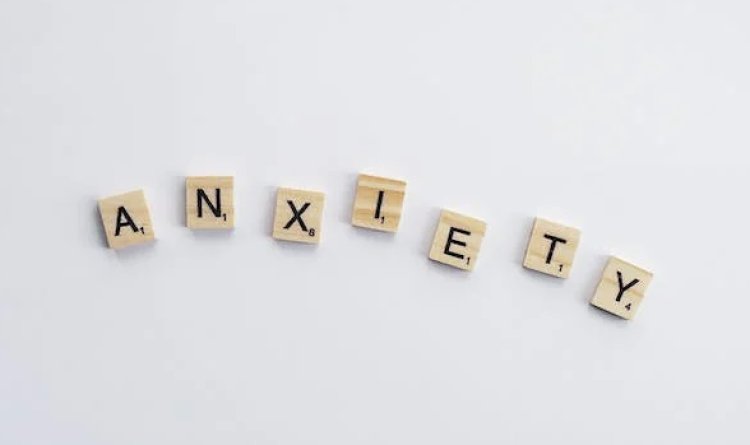
Anxiety is a medical problem that needs the attention of a qualified professional who offer mental health services. In 2019, 301 million people were living with anxiety including 58 million children and adolescents (1). This is a huge number and you are not alone!
What is Anxiety?
According to the World Health Organization, “Anxiety is characterized by excessive fear, worry, and related behavioral disturbances. Symptoms are severe enough to result in significant distress or significant impairment in functioning” (2).
There are several different kinds of anxiety disorders, such as:
- Generalized anxiety disorder – This is characterized by excessive worry
- Panic disorder – This is characterized by panic attacks
- Social anxiety disorder – This is characterized by excessive fear and worry in social situations
- Separation anxiety disorder – This is characterized by excessive fear about separation from those individuals to whom the person has a deep emotional bond.
Keeping your anxiety at bay and taking good care of your mental health is very possible.
There are some common habits that are likely to make your anxiety worse and changing these habits can have a tremendous difference in your mental. These common habits include:
- Skipping Meals – Your anxiety can be triggered when you skip meals yet so many people with anxiety have a habit of skipping meals. This is because they have no desire to eat and/or their minds are preoccupied with excessive fear and worry. Studies have shown that poor eating habits are associated with anxiety disorders. Furthermore, skipping meals has also been shown to trigger anxiety symptoms such as nervousness, irritability, light-headedness, dizziness, and weakness (3).
Recommendations:
- Aim to eat at least three meals every day i.e. Breakfast, Lunch, and Dinner with at least two healthy snacks between the meals.
- Eat a variety of natural whole foods rich in essential fatty acids, carbohydrates, vitamins, proteins, vitamins, and minerals.
- Consuming Alcohol – Most people with anxiety use alcohol as a coping mechanism. Even though alcohol stimulates happy chemicals such as dopamine and serotonin in the brain temporarily making one less anxious and feel happier, studies have shown that alcohol can also raise one’s anxiety within a few hours of consumption. Moreover, as alcohol starts to wear off your system, you are more likely to feel more anxious than you were before taking alcohol (4).
Recommendation:
- Eliminate alcohol while trying to get your anxiety under control.
- Not Exercising – Anxiety can be triggered by not being physically active. Our bodies are designed to move and therefore, if you sit down all day and you never do any physical activity, your mental health as well as your physical health is likely to suffer. Studies have shown that a sedentary lifestyle has the potential to increase the risk of anxiety. Furthermore, a higher sedentary time of more than 8 hours increases the likelihood of anxiety while moderate to high physical activity decreases the likelihood of anxiety (5).
Recommendations:
- Incorporate exercise such as walking, yoga, and hiking into your daily routine. Any type of physical activity can help you reduce your symptoms of anxiety. Be physically active every day. Just walk, even for just 30 minutes a day from work/school or to work/school.
- Lack of Enough Sleep – Anxiety is usually connected to sleeping problems. Excess worry and fear make it harder to fall asleep and stay asleep through the night. Sleep deprivation can therefore worsen anxiety, which eventually leads to a negative cycle of insomnia and anxiety disorders (6).
Recommendation:
- Aim to get at least 8 hours of sleep every night, try and make your room dark while sleeping, avoid eating 3 hours before you go to bed, and try to go to bed by 10 PM and not later than midnight.
- Too Much Caffeine – Did you know that having coffee or tea in the morning could make you have an anxious day? Interesting, right? Studies have shown that people who suffer from anxiety can end up worsening their day by taking caffeine (7). This is because caffeine makes our heartbeat rise, which is one of the physical symptoms of a full-blown panic attack.
Recommendation:
Take warm water with lemon as a substitute to keep you healthy by flushing out all the toxins.
- Too much time on social media – Social media has become part of daily routine hence it is not easy to avoid scrolling. However, social media makes one feel left out, having the fear of missing out, and, brings in comparison. Studies have shown that the more time you spend on social media, the more negative it affects your mental health (8).
Recommendation:
- Restrict your duration and frequency of using social media.
Avoiding these common habits will help you manage your anxiety. However, it is very important and we strongly encourage you to see a professional to get the right medication and the root cause of your anxiety.
Lots of Love,
Marylyn Ochillo
Article Sources
- Institute of Health Metrics and Evaluation. Global Health Data Exchange (GHDx). Available from: https://vizhub.healthdata.org/gbd-results/. Accessed on 04 August 2023.
- World Health Organization. Mental disorders. Available from: https://www.who.int/news-room/fact-sheets/detail/mental-disorders.
- Anderson L. Skipping Meals Is Associated With Symptoms of Anxiety and Depression in U.S. Older Adults. Innov Aging. 2020 Dec 16;4(Suppl 1):515. doi: 10.1093/geroni/igaa057.1663. PMCID: PMC7742741. https://www.ncbi.nlm.nih.gov/pmc/articles/PMC7742741/
- Smith JP, Randall CL. Anxiety and alcohol use disorders: comorbidity and treatment considerations. Alcohol Res. 2012;34(4):414-31. PMID: 23584108; PMCID: PMC3860396. https://www.ncbi.nlm.nih.gov/pmc/articles/PMC3860396/
- Silva LRB, Seguro CS, de Oliveira CGA, Santos POS, de Oliveira JCM, de Souza Filho LFM, de Paula Júnior CA, Gentil P, Rebelo ACS. Physical Inactivity Is Associated With Increased Levels of Anxiety, Depression, and Stress in Brazilians During the COVID-19 Pandemic: A Cross-Sectional Study. Front Psychiatry. 2020 Nov 17;11:565291. doi: 10.3389/fpsyt.2020.565291. PMID: 33312136; PMCID: PMC7704428. https://www.ncbi.nlm.nih.gov/pmc/articles/PMC7704428/
- Staner L. Sleep and anxiety disorders. Dialogues Clin Neurosci. 2003 Sep;5(3):249-58. doi: 10.31887/DCNS.2003.5.3/lstaner. PMID: 22033804; PMCID: PMC3181635. https://www.ncbi.nlm.nih.gov/pmc/articles/PMC3181635/
- Richards G, Smith A. Caffeine consumption and self-assessed stress, anxiety, and depression in secondary school children. J Psychopharmacol. 2015 Dec;29(12):1236-47. doi: 10.1177/0269881115612404. Epub 2015 Oct 27. PMID: 26508718; PMCID: PMC4668773. https://www.ncbi.nlm.nih.gov/pmc/articles/PMC4668773/
- Karim F, Oyewande AA, Abdalla LF, Chaudhry Ehsanullah R, Khan S. Social Media Use and Its Connection to Mental Health: A Systematic Review. Cureus. 2020 Jun 15;12(6):e8627. doi: 10.7759/cureus.8627. PMID: 32685296; PMCID: PMC7364393. https://www.ncbi.nlm.nih.gov/pmc/articles/PMC7364393/